 |
|||||||||||
Auguste Brouet1872 - 1941 |
|||||||||||
|
Click on a picture for more details |
|||||||||||
|
|||||||||||
|
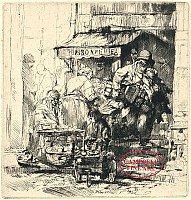
The exceptionally gifted printmaker Auguste Brouet was famed in his lifetime for his carefully observed scenes of the poorer folk and the streets of Paris, and for a small body of outstanding work depicting the ballet. A painter-etcher and illustrator, Brouet was trained in the studio of Gustave Moreau at the École des Beaux-Arts and it was his master's obsessive eye for detail which was to remain with him throughout his working life. In about 1892 Brouet began to learn the techniques of etching and engraving from Auguste Delatre and later from Delatre's son Eugene. Auguste Brouet first rose to prominence for his etched illustrations of gypsies and market vendors which were used in a variety of limited edition private press books. A native Parisian, Auguste Brouet found his immediate source of inspiration in the city of his birth, with its itinerant dealers, its gypsy encampments and its limitless variety of colourful characters. He haunted the streets of Montmatre for subjects, recording scenes with the acute eye of an unobtrusive observer and with a rapidity which never fails to convey a rich sense of detail and atmosphere. Aside from these fascinating genre studies, Brouet's overriding personal passion was for the ballet. His masterly depictions of ballerinas, both performing, or in their more intimate moments, have now become the most sought-after of all of his works. In all, Brouet is known to have produced over 300 original etchings and drypoints, placing him amongst the most prolific original printmakers of his generation. [more] |
|||||||||||


|
|||||||||||
 |
|||||||||||
|
|||||||||||
| © Campbell Fine Art 2009-2026 | Email: info@campbell-fine-art.com | Tel: +44 (0)1892 538962 | |||||||||

